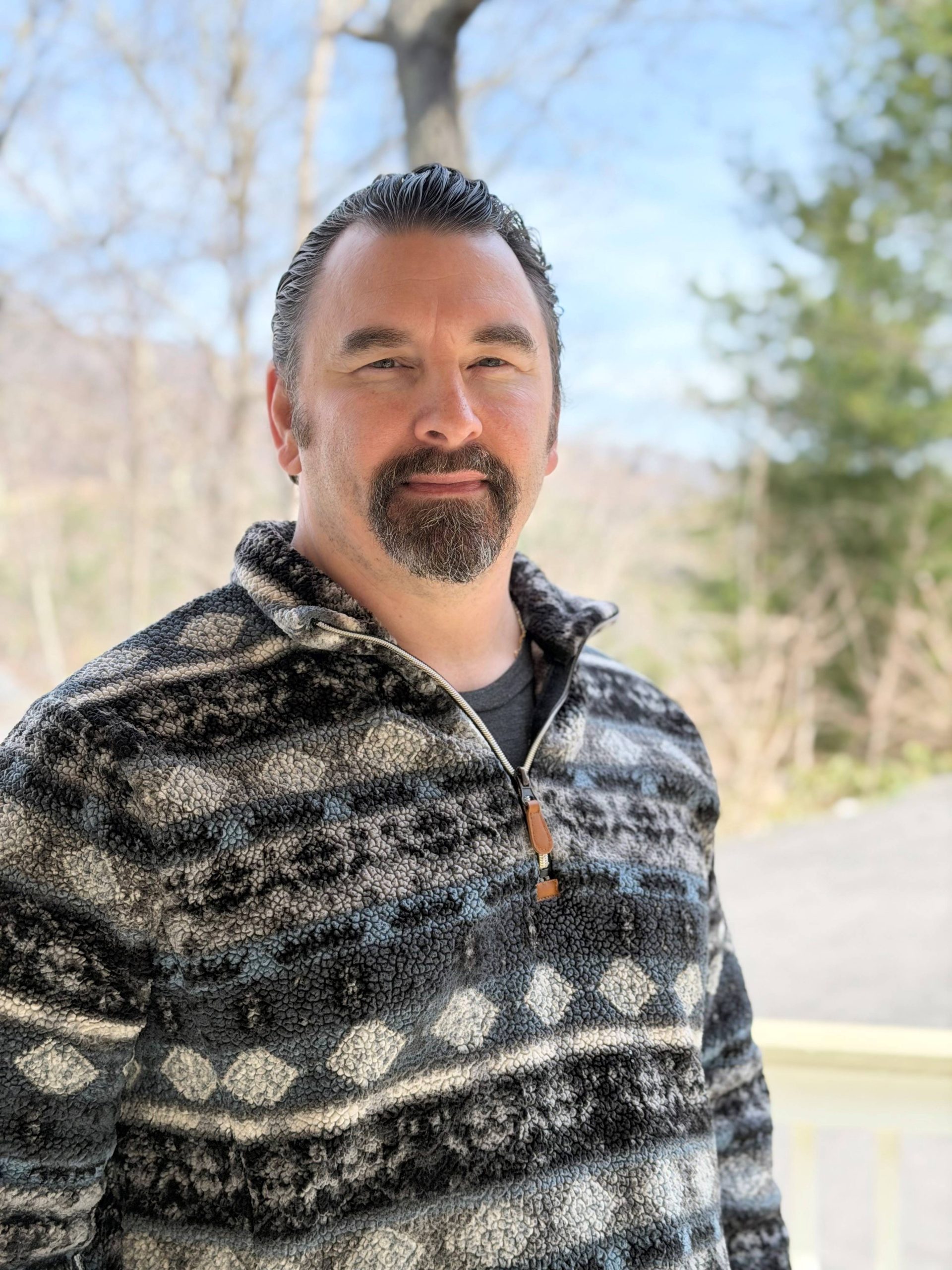
I didn’t come to this work through a straightforward path.
Before I was a therapist, I was a U.S. Marine — trained to project strength, suppress what’s underneath, and keep moving regardless of what I was carrying. That orientation served me in a lot of contexts. It also cost me things I didn’t fully understand until later.
When I transitioned out and eventually found my way into healthcare and then into clinical mental health work, I brought that background with me — not as a credential to display, but as a lived reference point. I know what it’s like to operate in high-pressure environments where vulnerability is a liability. I know what it costs to perform competence while something quieter is going on underneath. And I know how unfamiliar it feels to sit across from someone and actually say what’s true.
That’s the man I built this practice around.
Who I Work With
My clients are high-performing men — white collar and blue collar alike — who have mastered external success but privately feel anxious, empty, or trapped by their own standards. Whether they’re running a business, leading a crew, or building something from nothing — they’re exhausted by the version of themselves they’ve had to maintain to get there.
They come to me navigating perfectionism, imposter syndrome, burnout, and a sense of self-worth that rises and falls with results. Many have never been to therapy before. Some tried it and found it too passive for how they’re wired. What they share is a recognition that whatever they’ve been doing isn’t working — and a willingness, however reluctant, to try something different.
These aren’t abstract client profiles to me. They’re men I recognize.
How I Work
My clinical approach is grounded in Character Driven Therapy (CDT), an integrative framework I developed specifically for high-performing men after years of recognizing that existing models weren’t built for this population.
CDT is built around a central premise: sustainable change requires working at the level of identity, not just behavior. It’s not enough to manage anxiety symptoms if the underlying architecture of proof-based self-worth keeps generating them. CDT goes underneath the presenting problem to the character — the values, the self-concept, the relational patterns, and the internal narratives that organize a man’s experience of himself and the world.
In practice, CDT draws from several evidence-based orientations:
- Psychodynamic therapy — exploring the origins of your patterns and how early experiences continue to operate beneath your awareness
- Existential therapy — engaging the bigger questions about who you are, what you value, and what kind of man you actually want to be
- CBT and ACT — developing concrete tools to interrupt unhelpful thinking patterns and build psychological flexibility
- Solution-Focused and Narrative therapy — identifying what’s already working and reauthoring the stories that have kept you stuck
Sessions are direct, collaborative, and built to produce both insight and meaningful change. You won’t just talk about your life here. You’ll work on it.
Want to understand more about building self-worth beyond achievement? Start there.
Background
I hold licensure as a Licensed Mental Health Counselor in nine states — North Carolina, New York, Massachusetts, Florida, South Carolina, Connecticut, Illinois, Utah, and Idaho. I earned my Master’s degree in Counseling from the University of North Carolina at Charlotte in 2012, and I bring over 21 years of total healthcare experience, including six years in managed care before transitioning to full-time private practice.
My background as a U.S. Marine Corps veteran is not incidental to my clinical work. It shaped my understanding of identity under pressure, the cost of emotional suppression, and what it actually takes to ask for help when you’ve been trained to handle everything yourself. Many of my clients share that same orientation — and I meet them there.
If you’re a veteran navigating the transition to civilian life, trauma and identity work is something I bring personal experience to as well.
The Practice
Join the Rebellion 23 Inc. is a fully remote private practice available to clients in NC, NY, MA, FL, SC, CT, IL, UT, and ID. Sessions are $155, private pay, with superbills provided for out-of-network reimbursement.
I offer a free 15-minute consultation for prospective clients — a low-stakes conversation to get a sense of fit before committing to anything. Most clients find the first call tells them everything they need to know.
A Final Note
The men I work with are not accustomed to asking for help. If reaching out feels uncomfortable, that’s not a sign that therapy isn’t for you — it’s probably a sign that it is.
You don’t need to have everything figured out before the first call. You just need to be willing to show up and see what’s there.
Reach out when you’re ready.